
Homer’s Odyssey has once again entered the spotlight, sparking renewed worldwide interest in this famous epic. But between the Cyclopes and the Sirens, there are also lesser-known characters and stories waiting to be discovered.
In Part 1 of our series exploring those who dwell in the shadows of Greek mythology, we looked at enigmatic figures such as Silenus and Gitauros. Today, we turn to three fascinating but lesser-known motifs from the epos of Homer: Aeolus’s bag, Zeus Xenios, and the faithful Argos.
Aeolus’s Bag
After years of war and wandering, Odysseus was finally so close to Ithaca that he could see the watchfires burning on the shore. His journey home was almost over. All that was required was that no one opened the bag tied securely to the ship—the bag that held the storms.

Earlier, Odysseus had arrived at Aeolia, a floating island surrounded by an impregnable wall of bronze. There lived Aeolus, son of Hippotas and keeper of the winds. He could both unleash the winds and make them die down.
Aeolus welcomed the strangers warmly and let them stay for an entire month. When it was time for them to leave, he gave Odysseus an unusual farewell gift: a bag sewn from the hide of a nine-year-old ox. Inside, he had imprisoned the wild winds that could blow the ships off course. The bag was tied shut with a gleaming silver cord, while the west wind was left free to carry them home.
In the Odyssey, they sailed for nine days without stopping. On the tenth day, Ithaca came into view. Odysseus, who had tended the sail himself the entire time, finally fell asleep from exhaustion.
Then his men began to whisper. They believed that Aeolus had filled the bag with gold and silver that Odysseus intended to keep for himself. While he slept, they untied the cord.
All the winds burst out at once. The storm seized the ships and drove them all the way back to Aeolia. When Odysseus asked for help a second time, Aeolus refused. A man plagued by such misfortune must be hated by the gods, he reasoned, and sent him away.
Aeolus’s bag has become a symbol of how forces, once unleashed, can become impossible to control. In the Odyssey, it is also a story of how close disaster can be. Odysseus’s men did not have to defy a monster or anger a god. They only had to be curious, envious, and open the wrong bag.
The Law of Zeus in the Odyssey
In Christopher Nolan’s film, a solemn phrase recurs again and again: the law of Zeus. It sounds like a divine prohibition carved in stone, but it concerns something seemingly simple—how you receive a stranger at your door.

In the world of Homer, a journey could be deadly. There were no hotels to book and no way to announce that you were coming. Travelers depended on strangers to offer them food, rest, and shelter.
This sacred hospitality was called xenia. A host was expected to welcome strangers, give them something to eat, and let them rest before any questions were asked. Guests, in turn, were obliged to respect the household and not abuse their host’s generosity. An exchange of gifts could turn the encounter into the beginning of a bond of friendship between two families.
Hospitality was protected by Zeus Xenios, Zeus in his role as protector of guests. No one could be entirely certain who was standing outside the door. A poor wanderer might be a god in disguise.
The entire Odyssey can almost be read as a test of xenia. The Phaeacians rescue the shipwrecked Odysseus and help him return home. The poor swineherd Eumaeus shares his food with an unknown beggar and explains that all strangers and those in need come from Zeus.
The Cyclops Polyphemus does the opposite. When Odysseus invokes the protection of Zeus, the Cyclops mocks both the law and the gods—and then begins eating his guests. The suitors in Ithaca violate xenia from the opposite direction. They have been received as guests, yet they refuse to leave the palace, consume the family’s wealth, and plot to kill Telemachus.
The word philoxenia was already used in antiquity and survives in modern Greek. It is formed from philos, friend, and xenos, stranger: kindness toward the stranger. For many travelers in Greece, the idea is still easy to recognize—in the extra chair brought to the table, the offer of something to eat, and the help given without fanfare.
The law of Zeus, then, was more than a rule about good table manners. It made it possible to meet an unknown person without immediately drawing your sword. In the Odyssey, both humans and monsters are therefore revealed by a simple question: What do they do when a stranger stands at the door?
Argos
When Odysseus returned to Ithaca after twenty years of war and wandering, almost no one recognized him. Athena had transformed him into an old beggar, dressed in rags and leaning on a staff. But someone was waiting at the palace gate who could not be fooled.
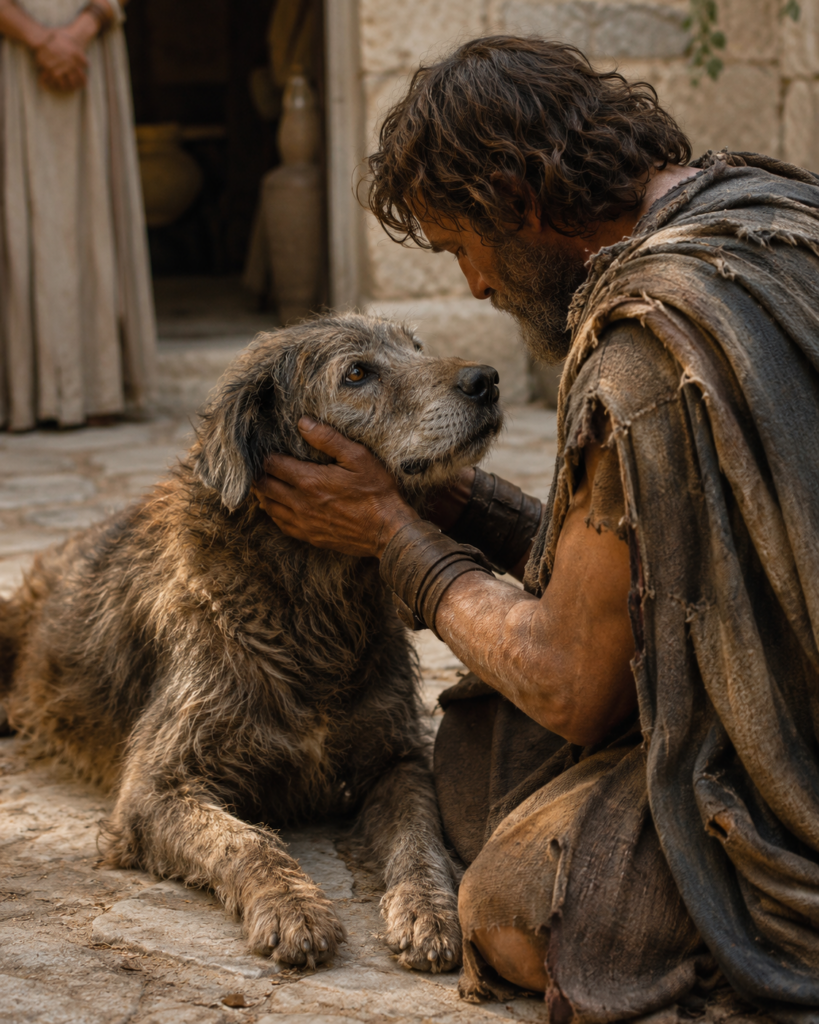
Argos, the dog Odysseus himself had raised before sailing for Troy, lay on a manure heap outside the palace. He had once been a swift and powerful hunting dog. No hare, deer, or wild goat could escape him when he followed a trail through the forest.
Now he was old, weak, and covered in vermin. With his master gone and Odysseus’s palace in the hands of Penelope’s overbearing suitors, no one cared for him anymore.
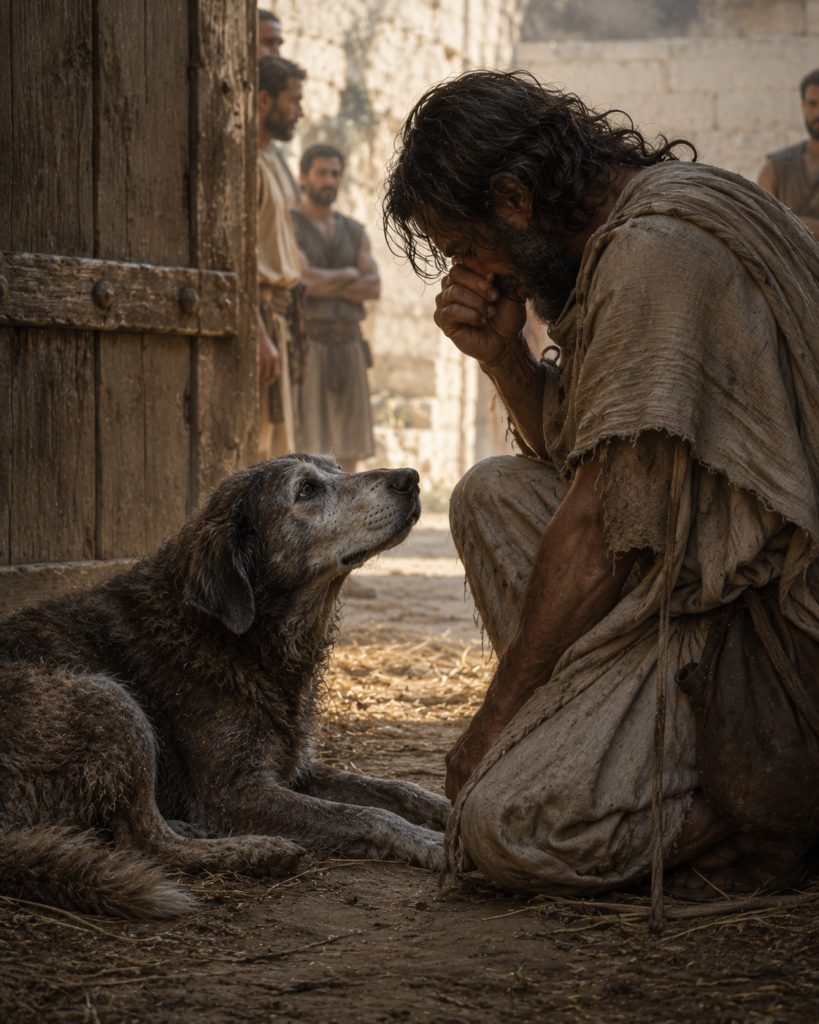
When the disguised Odysseus approached, Argos did not have the strength to stand. Yet he immediately recognized his master’s voice and form. He lowered his ears and gently wagged his tail. Odysseus turned his face away and wiped away a tear, because he could not greet the dog without revealing who he was.
Shortly afterward, Argos died. Homer writes that the darkness of death took him after he had finally seen Odysseus again, twenty years later.
And so, amid the Odyssey’s monsters, gods, and bloody vengeance, one of its most powerful scenes is the meeting between a man and an old dog. Argos needed neither divine signs nor a glimpse of the hero’s famous scar.
Argos knew who had come home.
In our series about those who live in the shadow of Greek mythology, the previous installment explored enigmatic figures such as Silenus and Gitauros. Today, it is time for three fascinating but lesser-known motifs from the Odyssey: Aeolus’s bag, Zeus Xenios, and the faithful Argos.
Sources
Centre for the Greek Language, The Odyssey