
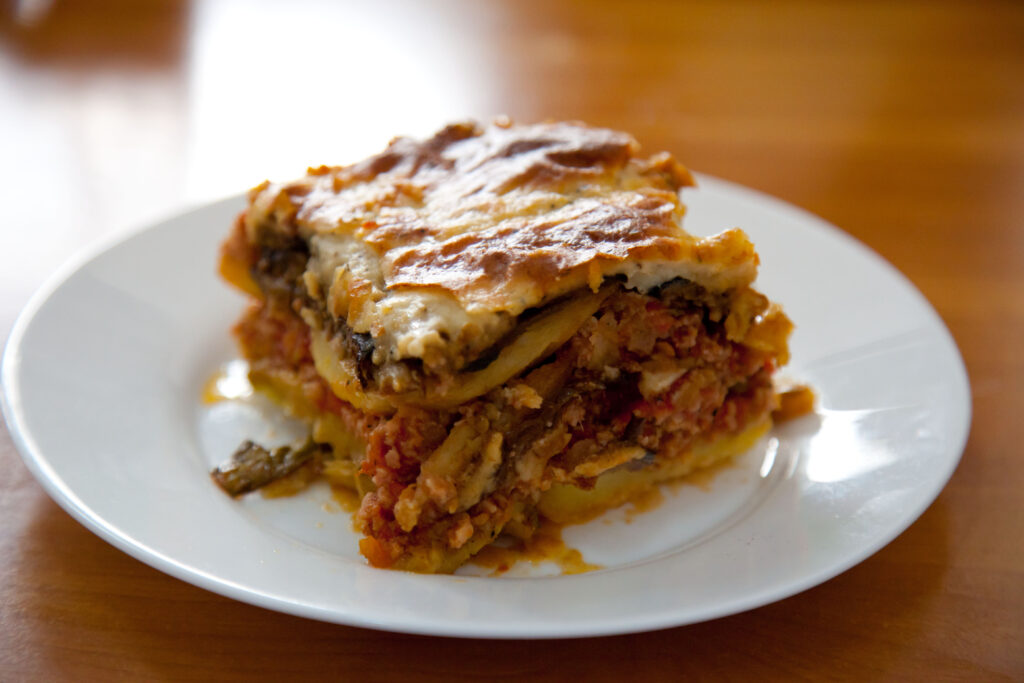
Today, many people associate the Greek kitchen with moussaka’s delicious, golden-brown béchamel topping. Beneath that golden layer are layers of eggplant, potatoes, and ground meat. Yet the dish in this familiar form is not as old as you might think.
The chef Nikolaos Tselementes was the man behind this transformation. Using French cooking techniques and Italian influences, he reshaped older Greek dishes and culinary traditions from the Eastern Mediterranean. His influence became so great that his last name became—and remains—a common Greek word for cookbook. But who was the chef who set out to modernize Greek cuisine?
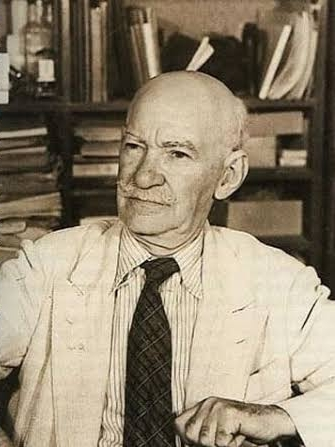
The chef who became a cookbook
Nikolaos Tselementes was born in 1878 into a family with roots in Exambela on the island of Sifnos, but he grew up in Athens. He initially worked in a notary’s office. His path to the kitchen began at his family’s Aktaion hotel and restaurant in Neo Faliro, where he got his first glimpse of professional cooking.
Tselementes was not content simply to learn the dishes already being served. He soon studied cooking in Vienna and later worked, among other things, as an embassy chef. In 1910, he began publishing the monthly magazine Odigos Mageirikis (Cooking Guide), featuring recipes, nutritional advice, and food news from other countries. After spending time in the United States, where he pursued further studies in cooking, pastry making, and dietetics, he compiled his knowledge in the major cookbook published in 1926.
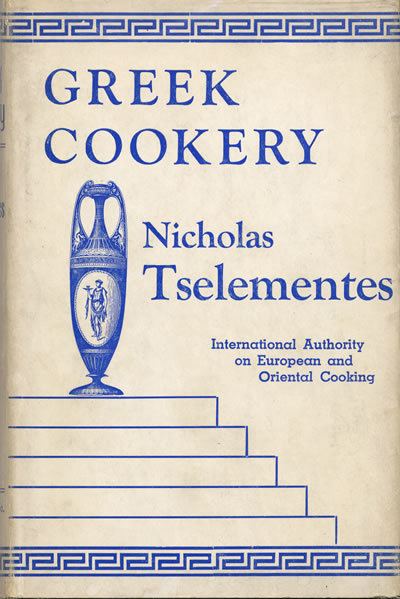
The book gave the growing urban middle class more than recipes: it offered standardized measurements, clear methods, and a vision of what a modern Greek kitchen should look like. Its impact was so great that, over time, the name Tselementes became synonymous with the Greek word for cookbook (τσελεμεντές/tselementes).
The word τσελεμεντές still means a cookbook or recipe collection in Greek. Even today, a Greek may open their tselementes to look for a recipe. In this usage, the name is written with a lowercase initial and even has a plural form. The chef had become a cookbook.
A cuisine in constant transformation
Greek cuisine had been evolving for thousands of years before Tselementes stepped up to the stove. Ingredients, dishes, and techniques had traveled between peoples and across seas. His contribution was therefore not the beginning of this transformation, but a new and extraordinarily influential chapter in it.
Moussaka
Moussaka (μουσακάς/mousakas) already existed in various forms throughout the Ottoman Empire and the Eastern Mediterranean. During the 1920s, Tselementes formulated and popularized his modern Greek version. The original recipe featured fried eggplant, ground meat, and a thick layer of béchamel, all baked together in the oven. An older dish thus acquired the form that has since become an international symbol of Greek food.
Pastitsio
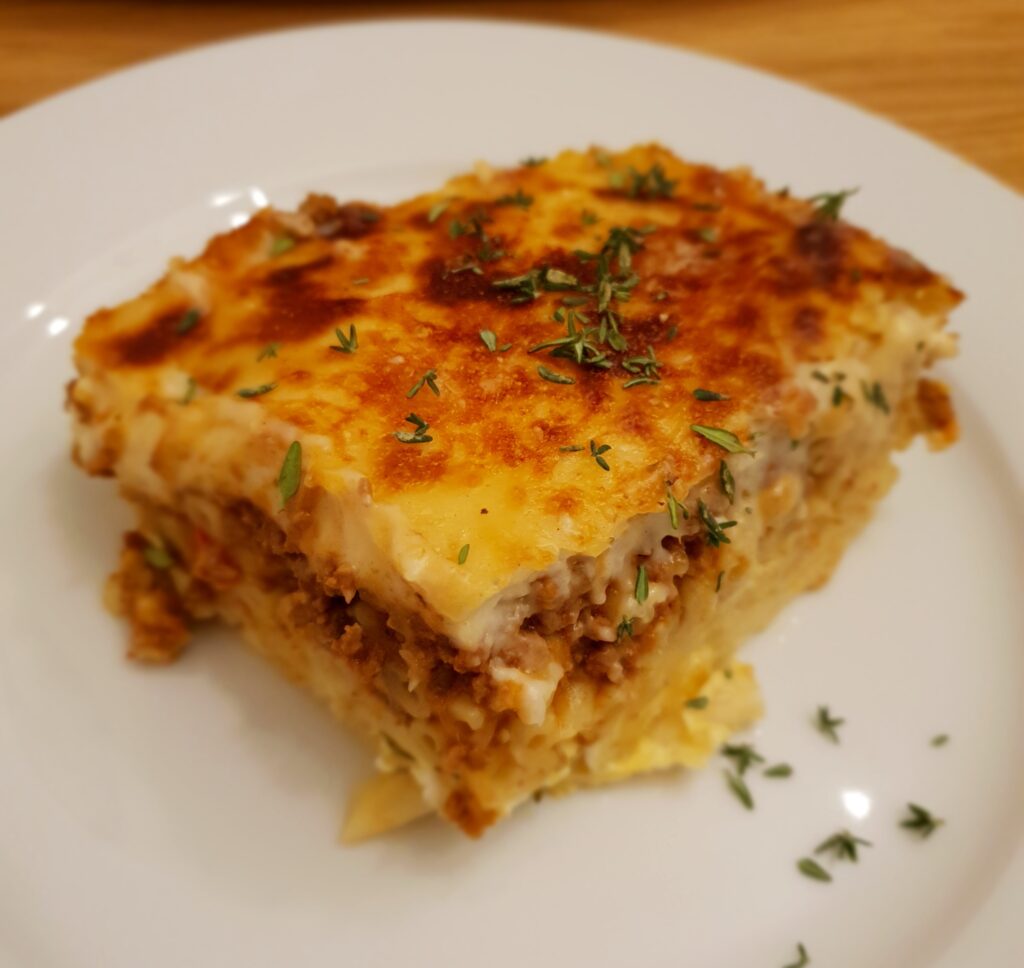
Something similar happened to pastitsio (παστίτσιο/pastitsio). The name comes from the Italian pasticcio, and an older pasta pie encased in pastry or phyllo existed on the Ionian Islands. Tselementes removed the crust and instead assembled the dish in open layers of pasta, ground-meat sauce, and béchamel. Greek American cookbook author Aglaia Kremezi has described how her grandmother preferred the old pasta pie, while her aunt defended the new “Tselementes style.” The transformation was therefore unfolding at family dinner tables as well.
Other Dishes
His influence can be seen in several other dishes and cooking methods:
- Greek béchamel: The French sauce was enriched with eggs and cheese and came to play a central role in several baked dishes.
- Stuffed eggplants (μελιτζάνες παπουτσάκια/melitzanes papoutsakia): Stuffed eggplant halves—“little shoes”—topped with béchamel in the modern version.
- Egg-lemon thickener (αυγολέμονο/avgolemono): Through his recipes, the older egg-and-lemon sauce acquired a thicker, more standardized urban form.
- Meatball and rice soup (γιουβαρλάκια/giouvarlakia): Meat-and-rice balls with older Eastern roots, popularized in the now-familiar soup served with avgolemono.
- Artichoke and vegetable stew (αγκινάρες αλά πολίτα/anginares a la polita): Tselementes helped rename and reshape the dish, but he did not single-handedly create the version known today.
- Oriental meatballs from Smyrna (σμυρναίικα σουτζουκάκια/smyrneika soutzoukakia): In his version, dried mint replaced the dish’s characteristic cumin as the dominant flavor.
His method was as important as the individual dishes. Tselementes used French techniques, butter, and cream, but above all, he provided exact quantities and clear instructions. Regional recipes passed down orally were adapted for an urban middle class that wanted to learn cooking from a book. He did more than make the dishes different—he also made them reproducible.
When the foreign becomes traditional
Tselementes’s changes were not met with admiration alone. Critics argued that he had Frenchified the Greek gastronomy: olive oil and garlic sometimes gave way to butter, cream, and French sauces, while Turkish names and Eastern influences were downplayed. Greek American cookbook author Aglaia Kremezi has said that he both changed and “ruined” Greek food. Historian Nikos Stavroulakis went further, calling him the greatest tragedy ever to befall Greek cuisine.
At the same time, the boundary between the foreign and the traditional is not always clear. Tomatoes and potatoes came to Europe from the Americas and have no ancient roots in either Greece or Sweden. Yet today, it is difficult to imagine Greek food without tomatoes, nor traditional Swedish cooking without potatoes. Something similar happened with several of Tselementes’s ideas. The béchamel topping, once perceived as a foreign addition, became within a few generations the most widely recognized image of authentic Greek cooking
That may be his clearest legacy: not that he single-handedly created modern Greek cuisine, but that he proved how quickly an innovation can become a tradition.
Keep cooking
- Modern Classic Pastitsio—Aglaia Kremezi
- Greek Béchamel and Papoutsakia—Kopiaste
- Anginares à la Polita—Caruso
Sources
Greek Reporter—overview/biography of Nikolaos Tselementes
https://greekreporter.com/2022/09/12/nikolaos-tselementes-father-greek-cookbooks/
Tselementes.gr—biography of Nikolaos Tselementes
https://tselementes.gr/author/nikolaos/
Aglaia Kremezi / Saveur—on Tselementes’s legacy
https://www.saveur.com/greek-chef-tselementes-legacy/
Wikipedia—Nikolaos Tselementes
https://en.wikipedia.org/wiki/Nikolaos_Tselementes