
Many of the villages of the Cyclades lie high above the harbors, with houses clustered closely together on the mountainsides. It is a familiar sight to many of us as the ferry approaches land.
The sun sparkles on the water, and down by the quay, cafés and restaurants await visitors. A few fishing boats are moored at the pier, and a little farther away stand a handful of scattered houses. But the island’s main village, often called Chora, lies high above the harbor. Sometimes it is barely visible from the sea.
Approaching the islands today, it looks idyllic, a place where you would happily settle down by the water and let time pass.
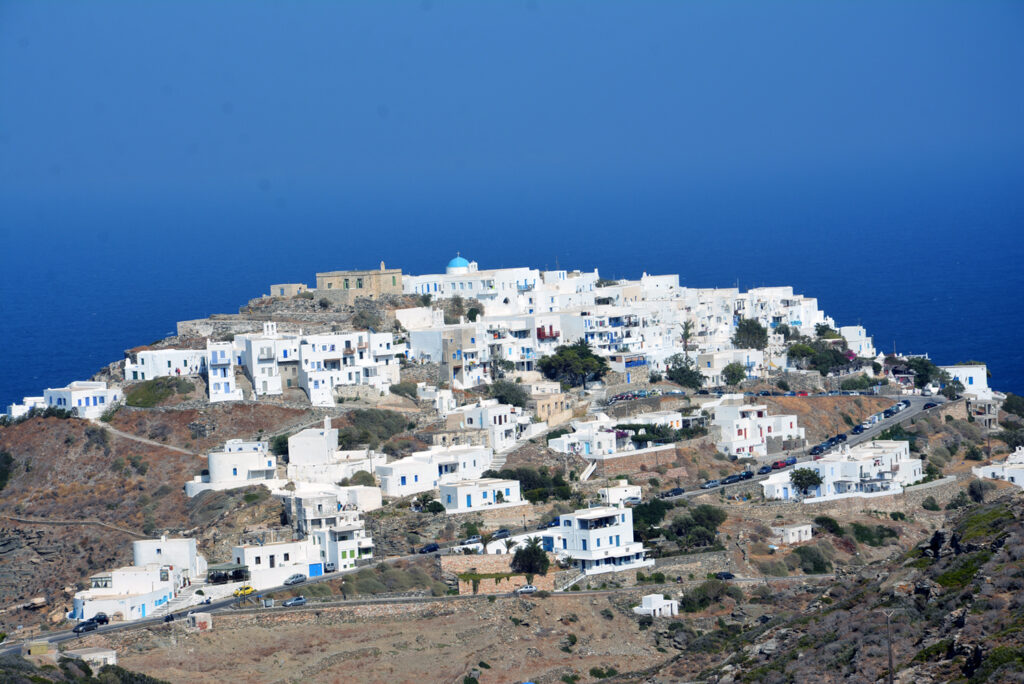
But for centuries, the sea could bring raiders. An unfamiliar sail on the horizon could mean it was time to seek shelter. A considerable distance from the coast, a slope that was difficult to climb, and a village that could be closed off like a small fortress therefore gave the inhabitants a better chance of surviving a pirate attack.
In the first part of this series, we explored why the houses of the Cyclades were painted white. Now we follow the road up from the harbor to understand why so many of the old villages of the Cyclades lie so far away – and how the threat of piracy helped shape them.
The threat of piracy dates back to antiquity
Piracy in the Aegean Sea has its roots in antiquity. Ships carrying valuable cargo traveled along the trade routes between the islands. The archipelago’s coves and small islands offered pirates not only hiding places but also sheltered bases for swift raids on shipping and coastal communities. Some harbors also became markets for their loot.
The distances and the difficulty of patrolling the sea left the islands vulnerable, particularly during periods of conflict between the great powers. The scale and intensity of the threat varied from island to island and over time, but the need for protection was a recurring part of life in the archipelago.
Who were the pirates?
The pirates’ origins and loyalties shifted over the centuries. Whenever the balance of power in the Aegean changed, so did the identities of those who engaged in piracy and those who became their victims.
In historical sources from the Middle Ages onward, we encounter North African pirates, European privateers, and sailors from the Aegean islands themselves. Both Christian and Muslim pirates took part, and who attacked whom changed with the wars and alliances.
Some also plundered on their own account. Others were privateers who attacked enemy ships with a local ruler’s permission. The boundaries were fluid: a sailor might engage in trade, capture ships in the service of a state, and practice piracy at different stages of his life.
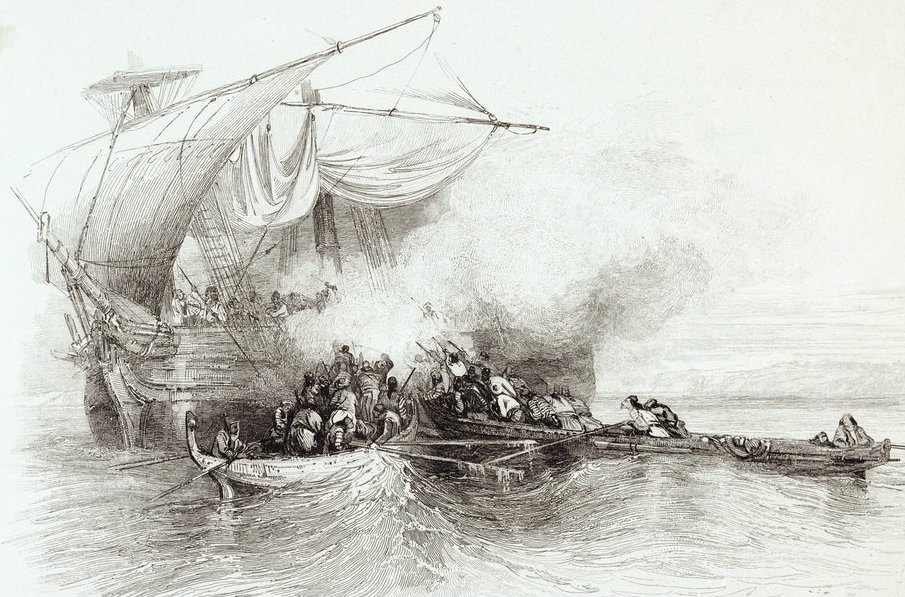
The pirates’ names and home ports changed over the centuries. Arab raids struck the Byzantine islands in the eighth century. Later, Turkish seafarers attacked the villages of the Cyclades, which were then mainly under Latin rule. Western European privateers, in turn, were also raiding along the Ottoman Empire’s sea routes.
In straits and narrow passages, ships lay in wait for merchant vessels, but raids also reached entire villages, smaller communities, and isolated farms. Sheltered coves and harbors were used to repair ships and replenish water and provisions, sometimes with the islanders’ help. During wars, the great powers could recruit seafarers who had previously been regarded as pirates.
Learning to live with the threat
The islanders themselves were not always merely victims, either. Some took part in the raids, while others supplied pirate crews with provisions or bought and sold their loot. The same harbor could be a refuge for one crew but a threat to another.
For the villagers, an attack could mean having their homes and storehouses plundered. Raiders often targeted celebrations when many inhabitants gathered in one place, wearing their jewelry and carrying other valuables. People also risked being abducted and sold at slave markets in North Africa or in the cities of the Ottoman Empire.
For those taken captive, hope lay in their families’ ability to pay the ransom to buy their freedom. When there was not enough money, the village community had to try to help. During periods of intense piracy, the costs could become a burden even for prosperous communities. Special funds were established and harbor fees collected to finance the ransom of captives.
These experiences lived on in songs, laments, and legends. Stories were told of saints who rescued people from captivity, but also of pirates’ exploits, which over time turned them into legendary figures. Even proverbs and everyday expressions still bear traces of the age of piracy. The islanders learned to live with a threat they themselves could rarely eliminate.
Even today, traces of the pirate threat can be found in some of the islands’ traditions. During festivities, participants dressed as pirates stage raids and abductions. What is now a playful performance recalls a threat that recurred throughout much of the islands’ history.
The villages of the Cyclades built for defense
Amorgos – shelter inland
On Amorgos, at the eastern end of the Cyclades, the main village, Chora, lies a considerable distance inland. Its houses cluster around a steep rock crowned by a castle. The island’s history is marked by a major shift from coastal settlements to the interior, linked to Arab raids during the early Middle Ages. In the late Middle Ages, the island passed from Byzantine to Latin rule.
In 1537, Amorgos was attacked by the famous pirate Barbarossa, who became an admiral in the Ottoman fleet. The island subsequently came under Ottoman sovereignty. But the inhabitants were not merely victims of piracy – according to historical sources, they also engaged in piracy themselves at times.
Amorgos is also home to the famous monastery of Panagia Chozoviotissa, built against a sheer cliff face about 300 meters above the sea.
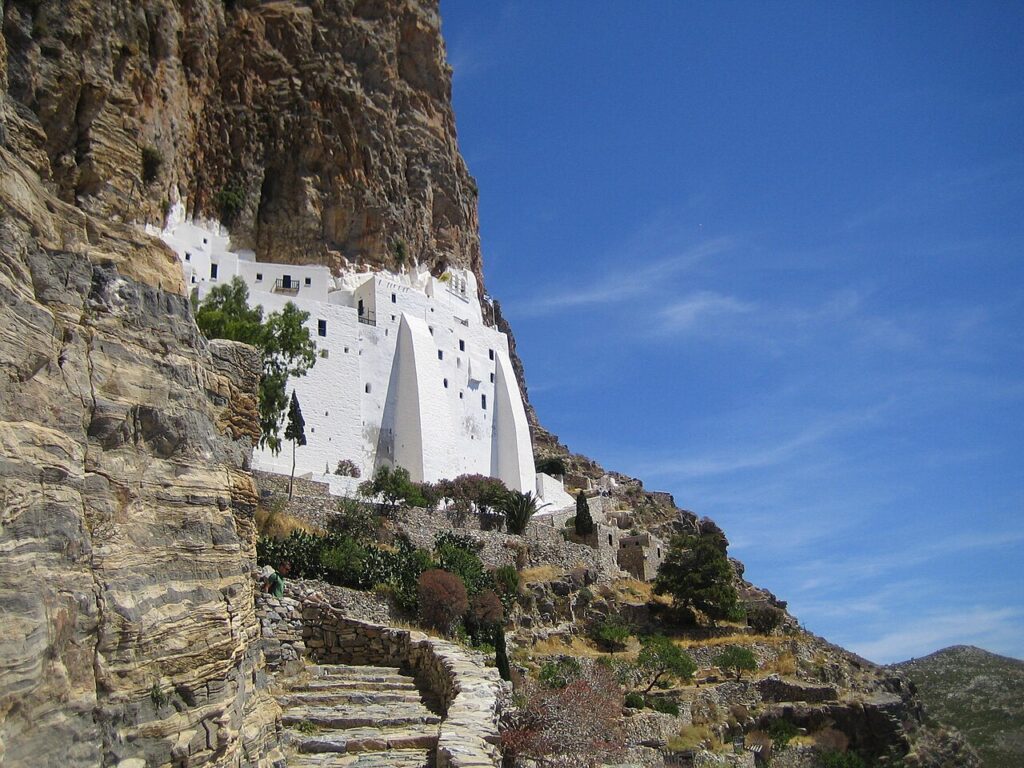
For a time, the monastery served as a stronghold against pirates. Its entrance was ten meters above the ground and was once reached by a suspended ladder. Here, too, access was therefore severely restricted – a reminder of how different conditions could be for those who lived on the island.
Folegandros – a village at the cliff’s edge
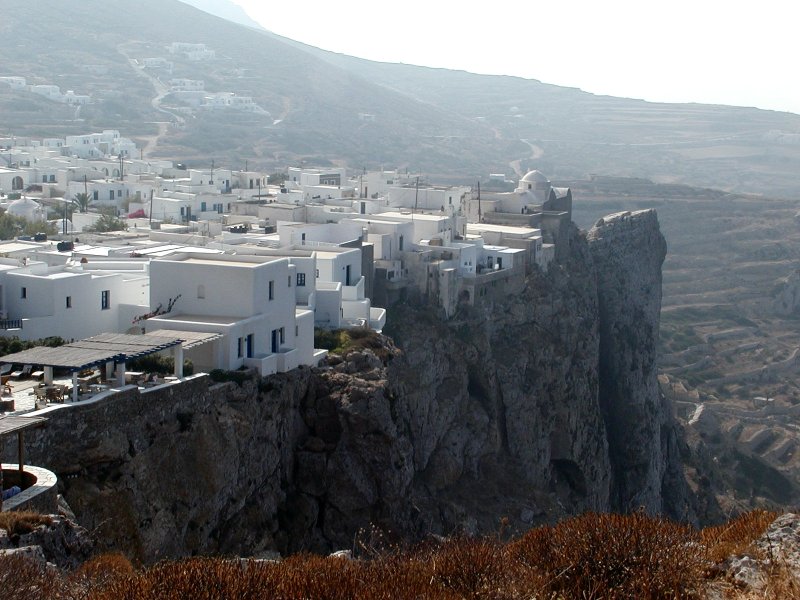
On Folegandros, Kastro (the castle) forms the oldest part of Chora. This medieval quarter was built as protection against pirate raids, with one side at the cliff’s edge and two entrances from the rest of the village. People still live here in a quarter whose restricted access was once an important part of their security.
Sifnos – the houses became the defensive wall
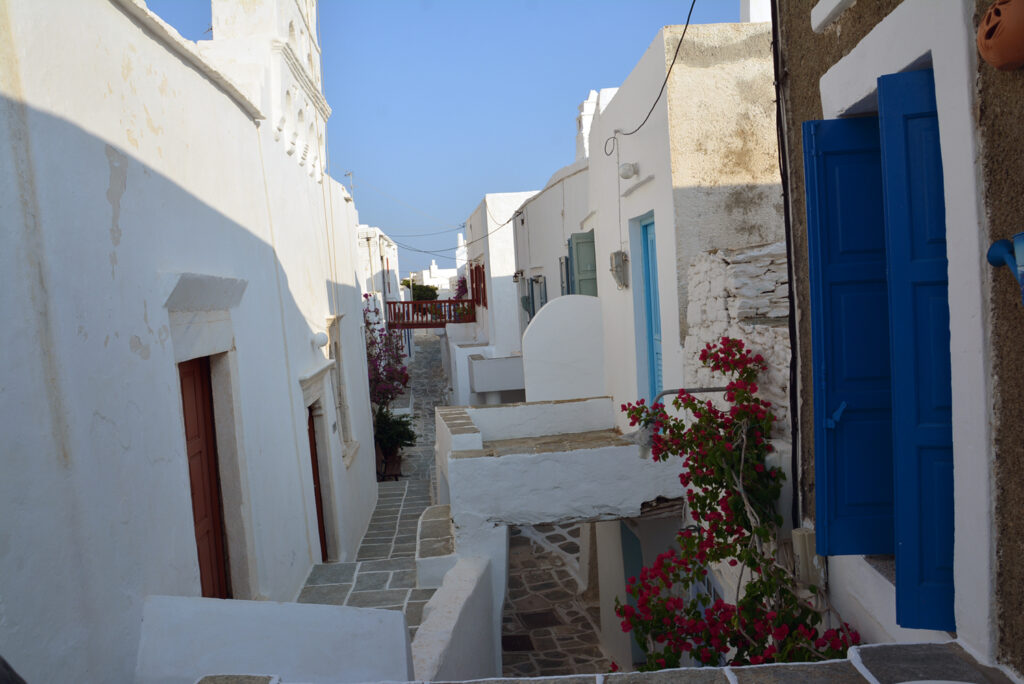
On Sifnos, the houses themselves became a defensive wall. In Kastro, they stood close together, facing inward and with only a few small openings on the outside. Access was through a small number of gateways that could be closed with iron-reinforced doors. Meanwhile, the marketplace was in the nearby harbor below.
Other Cycladic islands
In many villages of the Cyclades, the relationship with pirates also varied over time. Milos, Kimolos, and Mykonos could suffer raids but also served at certain times as pirate haunts and markets for plundered goods. The need for protection could therefore go hand in hand with some of the islands’ inhabitants profiting from piracy.
The remote locations and fortifications of the main Cycladic villages did not mean that contact with the sea was broken, either. The village and the harbor served different functions within the same community: the inhabitants needed both sheltered homes and access to shipping and trade.
When did the pirate threat end?
It is easy to imagine that the pirate threat ended after the War of Independence, which began in 1821 and eventually led to the establishment of the modern Greek state. But piracy did not disappear with independence. Particularly during the turmoil of the war’s early years, pirate raids increased throughout the archipelago.
This also forced foreign navies to intervene. Between 1825 and 1828, the United States sent warships to the Aegean to protect its trade. They escorted merchant vessels and attacked pirates in the Cyclades and elsewhere to curb the threat.
From 1828 onward, Greece’s new head of state, Ioannis Kapodistrias, took forceful measures against piracy. Admiral Andreas Miaoulis played a central role in these efforts. He is said to have previously engaged in piracy himself – yet another example of how quickly a role could change in the Aegean of that era.
These operations struck important pirate bases, but some crews moved their activities to other parts of the Aegean. As late as 1879, piracy was reported around the Small Cyclades, between Naxos and Amorgos. It is therefore difficult to give a single end date for piracy throughout the archipelago.
Pirates as adventure – and reality
The pirates of the Aegean have also left their mark on international literature. Jules Verne set his novel The Archipelago on Fire, published in 1884, during the Greek War of Independence in the 1820s. Piracy, the slave trade, and the struggle to free captives became the material for a grand adventure in the Greek islands.
But for the people of the Cyclades, the pirate threat had, for centuries, been far more than a fictional adventure. The sea was the route to trade, work, and contact with the outside world, but also the route from which danger could arrive unexpectedly. It was within this contradiction that many of the islands’ communities took shape.
Sources and further reading
- Foundation of the Hellenic World (IME): Piracy in the Aegean – a historical overview of piracy and its significance for island communities.
- Nikos Belavilas: Piracy in the Aegean, Parola – pirates, harbors, and the islands’ relationship with piracy.
- Greek Ministry of Culture: Χώρα της Αμοργού – Chora on Amorgos – the settlement’s history and the shift from the coast to the interior.
- Ephorate of Antiquities of the Cyclades: Το Κάστρο της Σίφνου από τους βυζαντινούς χρόνους και εξής – Kastro on Sifnos from Byzantine times onward – the defensive role of the houses, the gateways, and the harbor.
- Municipality of Folegandros: Το Κάστρο – Kastro in Chora on Folegandros – the fortified quarter and protection against pirate raids.
- Wikipedia: Amorgos, US anti-piracy operations in the Aegean Sea, and Jules Verne’s L’Archipel en feu.
Related articles
Who Painted the Houses of the Cyclades White?
The Greek islands between the 16th and 20th centuries, part 1
Amorgos – a gem in the big blue