
Most people use the Athens Metro to travel between the Acropolis, Monastiraki, and Syntagma. Few realize that the same journey is also a trip through nearly 3,000 years of history.
The expansion of Athens’ modern subway system led to the largest archaeological excavation ever carried out in the city. Archaeologists investigated around 850,000 square feet of ground and uncovered more than 50,000 artifacts.
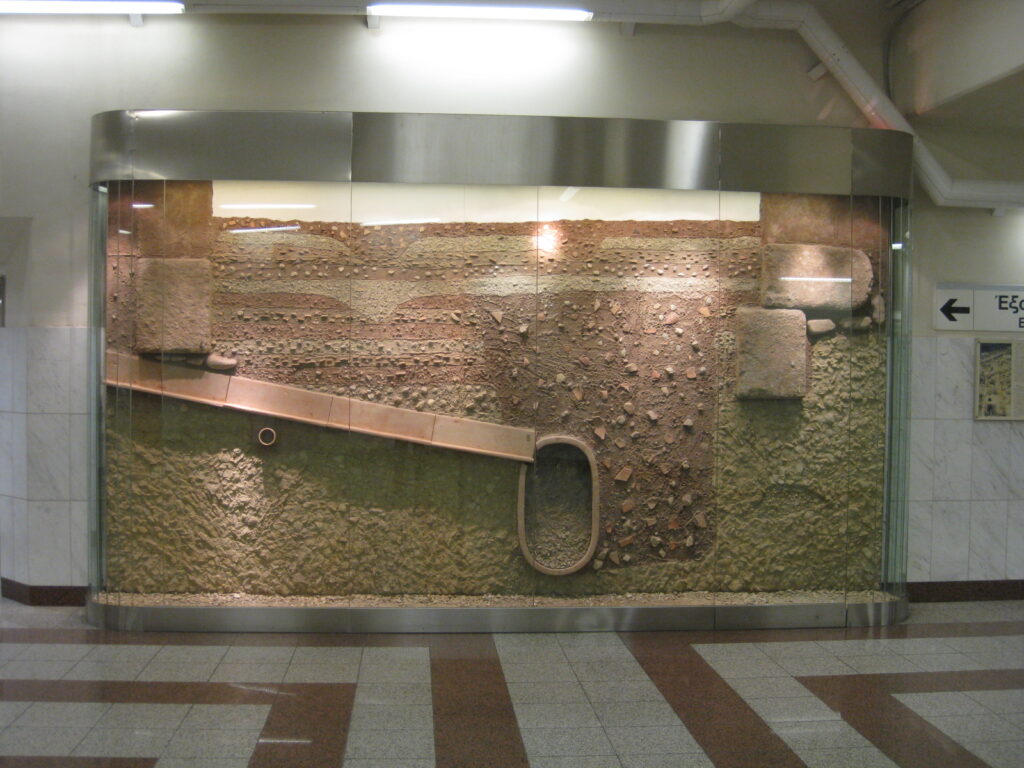
The result is an unusual museum where escalators, platforms, and ticket machines share space with graves, pottery, and archaeological remains—sometimes preserved on site, sometimes incorporated into displays inside the stations.
Six stations, thousands of years of history
Not every Athens Metro station has an archaeological exhibition, but several of them collectively tell the story of the city’s many historical layers.
Cemeteries, water systems, workshops, and homes offer glimpses of life in ancient Athens. They also introduce us to the Eridanos, one of the most important rivers of ancient Athens, which still flows beneath the heart of the city.
Today, we stop at four central Athens Metro stations that many visitors pass through during their stay. Together, they show how people have lived in, built, and shaped Athens over thousands of years.
Panepistimio – a quiet beginning to a journey through history
The archaeological exhibition at Panepistimio is relatively understated, making it easy to walk past the wall displays without noticing the finds inside.
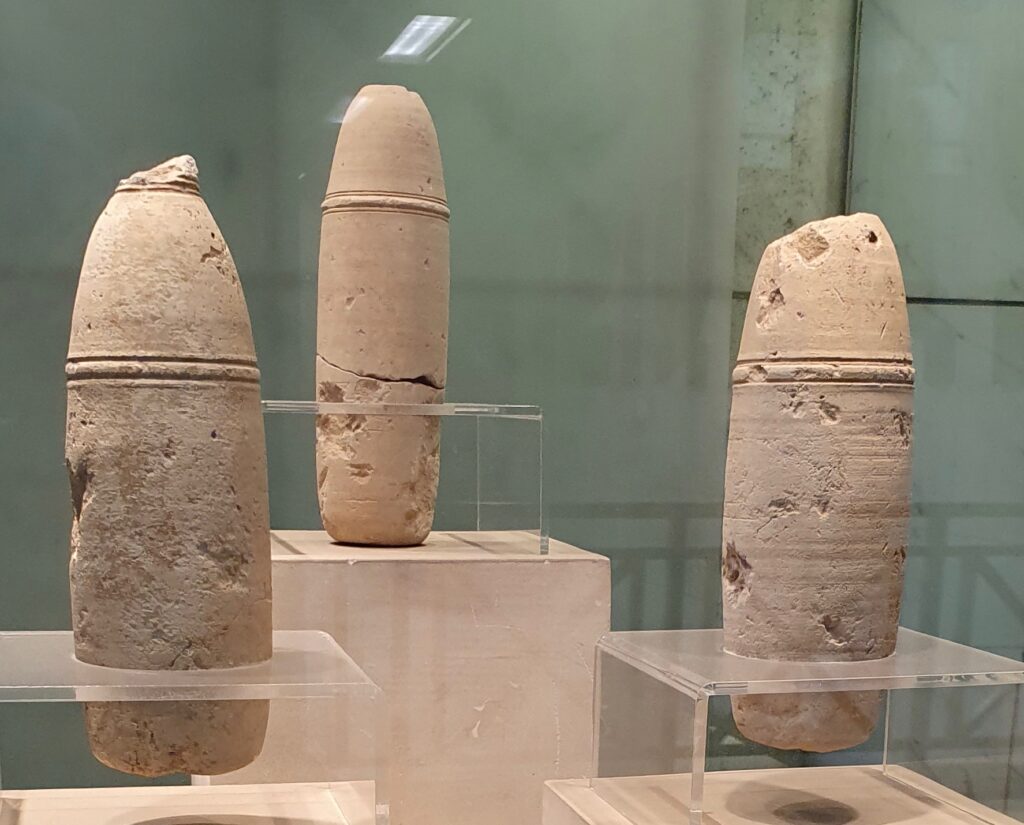
During the construction work here, among other things, a large ancient cemetery was uncovered. Grave goods and small artifacts are now displayed inside the station—not monumental ruins, but traces of everyday lives.
That is also what makes this station a good starting point for exploring the history inside the Athens Metro. It is not about being dazzled by a single attraction, but about slowing down and realizing that Athens’ past is not confined to the city’s famous archaeological sites.
The exhibition requires only a few minutes of attention, but it offers a new perspective on the rest of the subway journey—and a reminder that central Athens lived many lives before today’s universities, traffic, and cafés.
Syntagma – a cross-section of Athens
Syntagma Square is a natural meeting place for many people in Athens. Its station also shows more clearly than any other how the city is built in historical layers.
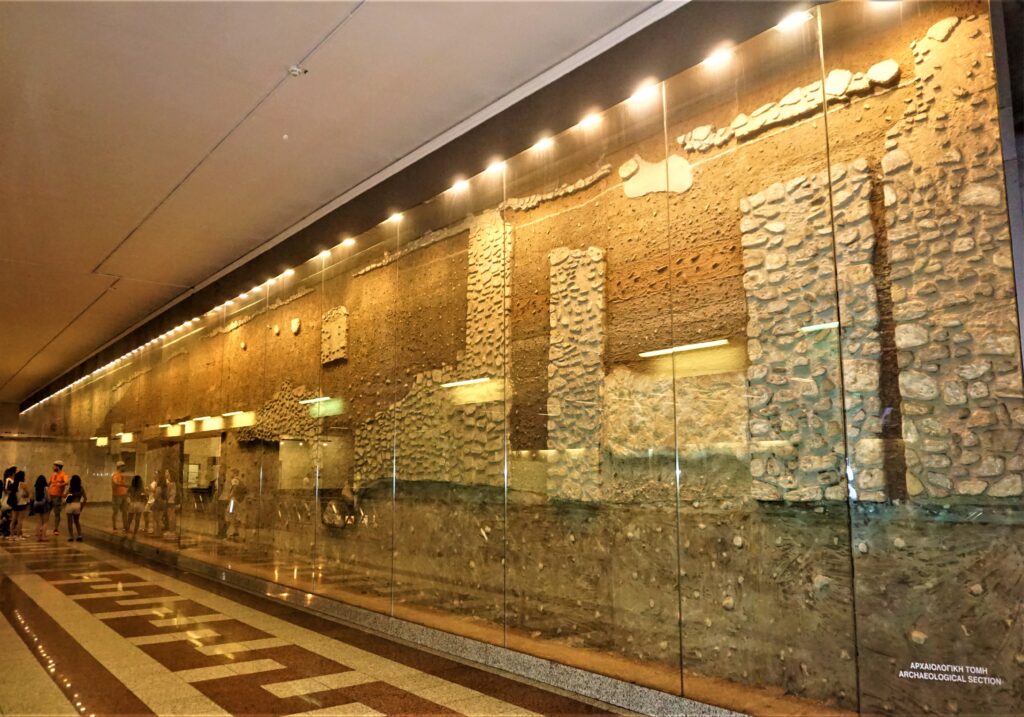
Here, a cross-section of the ground reveals the different periods of Athens lying one above another, like stacked pages in the city’s own history book. It makes Athens’ long history easier to understand, even for visitors who cannot distinguish the Classical period from the Roman or Byzantine eras.
The excavations uncovered a workshop where sculptures were cast, graves, a Roman bath, parts of the city’s early water system, and a road that once led north from Athens. Together, these remains remind us that people worked, traveled, bathed, and buried their dead on this spot for thousands of years.
Monastiraki – where the ancient Eridanos still flows
Monastiraki is the Athens Metro station where history feels closest to us. Around 3,200 square feet of the excavated area and its archaeological remains have been preserved in place and incorporated into the station. From a 79-foot glass walkway, visitors can look down at the remains of the Eridanos—the river that once shaped this area and still flows beneath the city.
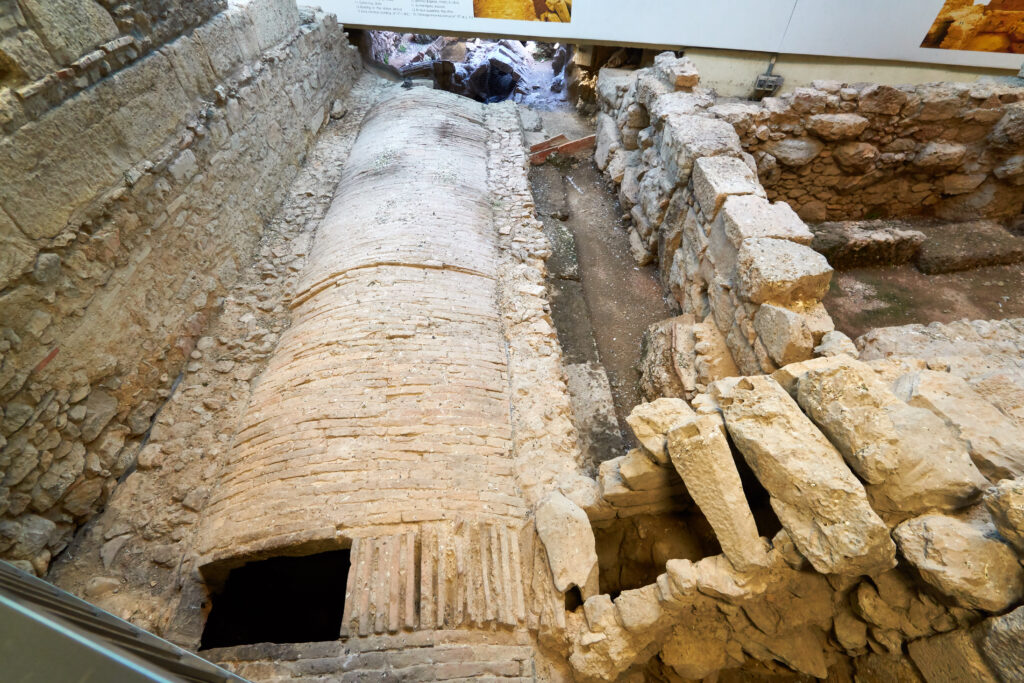
The Eridanos shaped the area for thousands of years. During the late Classical period, the riverbed—around 8.5 feet wide—was lined with large stone blocks. Later, in the Roman era, it was covered with a brick vault on the initiative of Emperor Hadrian. Fill was placed over the vault, and the Eridanos became part of the city’s sewer system.
Above ground, Monastiraki is bustling with people. Beneath the paving stones, the Eridanos continues to flow—another reminder that the city’s history is not confined to museums and famous archaeological sites.
Akropoli – everyday life in the shadow of the Acropolis
For many visitors, Akropoli station is simply a stop on the way to Athens’ most famous sight. But the exhibition inside tells a different story. It shifts our attention away from magnificent temples and symbols of state power, toward the ordinary people who lived, worked, and traded in the shadow of Athens’ sacred rock.
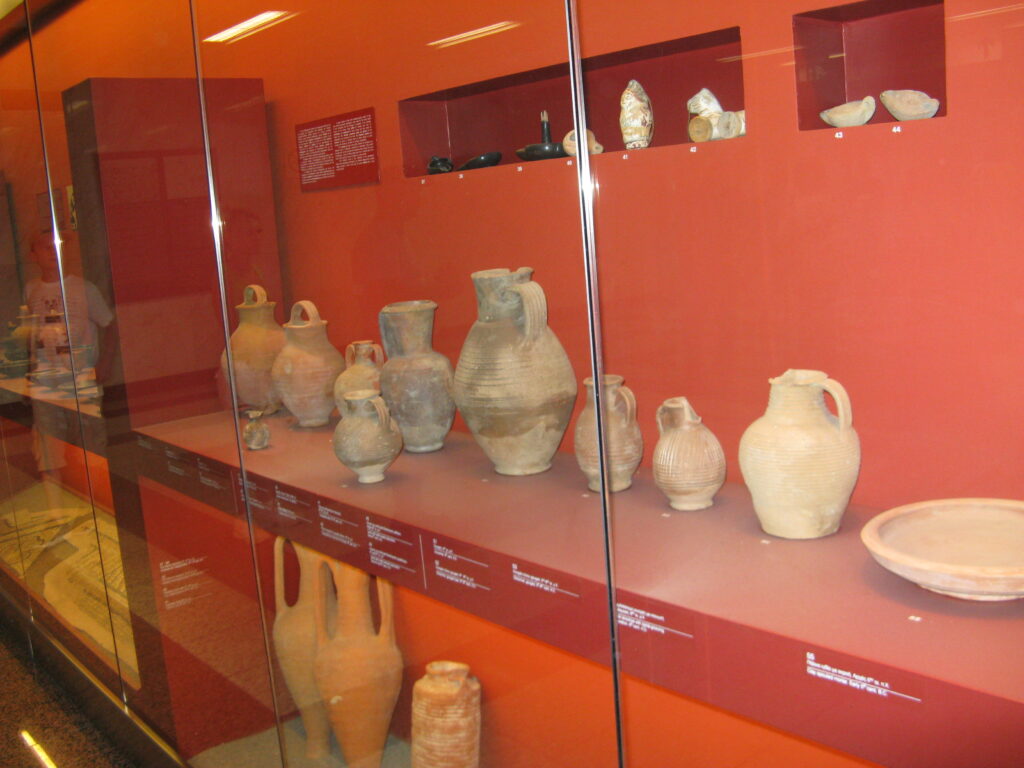
The excavations here covered around 27,000 square feet and revealed traces of graves, homes, workshops, roads, and baths dating from the late third millennium BCE through the Byzantine era.
In a display almost 50 feet long, pottery, mosaic fragments, trade vessels, and an upright loom tell the story of everyday life, commerce, and craftsmanship across the millennia.
Together with the Acropolis and the Parthenon above ground, the station’s exhibition offers a fuller picture of the ancient city—one in which daily life, work, and trade take their place alongside temples and monuments.
All stations with exhibitions
This article has stopped at four central stations, but archaeological exhibitions can also be found elsewhere in the Metro. Today, six stations have exhibitions, and the list may grow as the network expands, as further discoveries come to light:
- Akropoli
- Dafni
- Evangelismos
- Monastiraki
- Panepistimio
- Syntagma
Photographs from the exhibitions at all six stations above are collected on Wikimedia Commons.
Turn your Metro ride into a journey of discovery
The next time you ride the Athens Metro, give the stations a few extra minutes. Then your trip will become more than a way to travel between the city’s sights—it will also be a journey through the many layers of Athens’ history.
Sources
Elliniko Metro, Archaeological Work at the Athens Metro
Related articles
Explore all our articles about Ancient Greece here >>